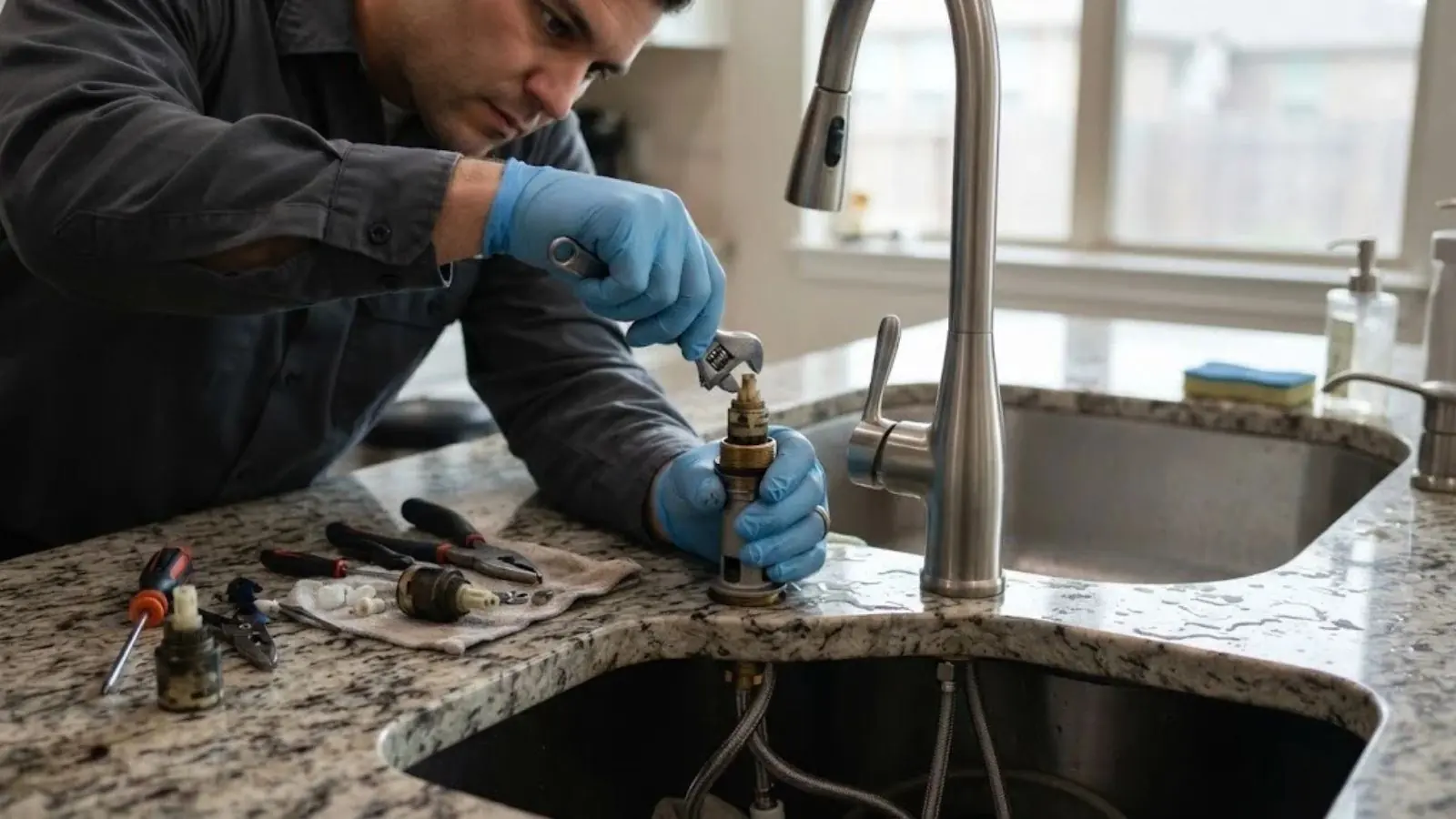
Start by finding where the water is coming from
A drip from the spout when the faucet is off means water is getting past the seal inside. A drip from the base of the spout or handle means a seal outside the valve has failed. A drip under the sink is a different job and often points to a supply line or a drain connection.
Dry the faucet with a towel, then press a dry paper towel against the base, the handle and the supply fittings under the sink. The towel shows the wet spot within a few minutes. This one test decides which parts you will need.
Drip location and the usual cause
Use this as a starting guide. A faucet can have more than one worn part, but the first match is usually right.
| Where it drips | Most likely cause | Typical fix |
|---|---|---|
| Spout, steady drip when off | Worn cartridge or washer and seat | Replace cartridge, or washer and spring |
| Spout, drip only at one handle position | Ceramic disc cracked or scaled | Clean or replace the disc cartridge |
| Base of the handle | Dry or cut O-ring | Replace the O-ring, add plumber's grease |
| Base of the spout on a swivel faucet | Spout O-rings worn | Replace both spout O-rings |
| Under the sink at a supply line | Loose nut or cracked washer | Snug the nut, or replace the line |
| Weak stream, spray in odd directions | Aerator clogged with scale or debris | Soak and clean, or replace the aerator |
Cartridge faucets: the single-handle suspect
Most single-handle bathroom faucets use a cartridge, a small cylinder that slides or turns to mix hot and cold water. Inside are rubber seals and, in many models, a ceramic disc. When the seals harden or the disc cracks, water slips past and the spout drips.
To replace one, shut off both supply stops under the sink and open the faucet to drain pressure. Pry off the cap, remove the handle screw, pull the handle, and take out the retaining clip or nut. Match the old cartridge to the new one by brand and model number, not just by look.
Compression faucets: washers and seats
Older two-handle faucets use a rubber washer that presses down on a brass seat to stop the flow. After years of use the washer flattens or cracks, and the seat gets pitted. Hot water side drips usually mean the hot washer wore out first.
A new washer and spring cost a few dollars. If the seat is rough, a seat dresser tool smooths it, or the seat is replaced. If the faucet is more than twenty years old and the parts are hard to find, replacement may make more sense than repair.
Aerators, scale and low flow
The aerator is the small screen at the tip of the spout. It mixes air into the water so the stream feels full. Sediment and mineral scale collect on the screen and slow the flow or send the water sideways.
Unscrew it by hand or with a rag and pliers, then soak it in white vinegar for an hour and brush off the scale. A clogged aerator will not cause a drip by itself, but it raises the pressure behind the faucet and can make a weak seal worse. If the screen crumbles, replace it.
Before you take the faucet apart
A few minutes of setup avoids a flooded counter and a second trip to the store.
- Close both supply stops under the sink by turning them clockwise. If a stop will not turn or leaks when moved, stop and call a plumber.
- Plug the drain with a rag so small parts cannot fall in.
- Take a photo at each step so reassembly is easy.
- Note the faucet brand, usually stamped on the spout or inside the handle, and bring the old part to the store.
- Have a screwdriver set, an adjustable wrench, a hex key set, plumber's grease and white vinegar ready.
- Open the faucet after closing the stops to release pressure before you remove the handle.
What Altamonte Springs homeowners should know about faucet drips
The city draws its drinking water from the Floridan aquifer, treats it with tray aeration, chlorine and orthophosphate for corrosion control, and publishes an annual drinking water quality report. The report does not list hardness, so if you see white crust on the aerator, that is your own tap telling you something. Check the screen every few months and clean it as above.
If your home is a rental, the faucet belongs to the landlord or property manager in most leases. Tell them about the drip in writing, since the city counts 97 multifamily communities and many tenants share this situation. A written note starts the repair clock and protects you if damage follows.
Fixture standards referenced by the International Plumbing Code (IPC) cover materials and flow rates, which is why a replacement cartridge or faucet should be a part made for your model.
A faucet that drips only a little but stains the basin brown or green may be leaking at the cartridge seat. Brass and copper traces leave those colors, so treat it as a sign of wear, not just a cosmetic issue.
When to stop and call a plumber
Call if the shutoff valves under the sink do not close or drip when you turn them. Call if the handle will not come off, if the faucet is a pull-out or touchless model with electronics, or if the drip continues after you replace the cartridge. Corroded parts can strip, and forcing them can crack the faucet body.
A technician can swap a cartridge in minutes with the right puller tool, and they carry common parts on the truck. If the faucet is beyond saving, our faucet repair visit includes fitting a new unit. If the leak under the sink is wet to the touch, call the 24/7 line right away.
What a faucet repair or replacement costs
These are typical ballparks that change with the faucet brand, finish and access. They are not quotes.
| Job | Typical ballpark |
|---|---|
| Replace cartridge or washer | $120 to $300 |
| Replace aerator or O-rings | $90 to $200 |
| Install a customer-supplied faucet | $150 to $350 |
| Replace faucet and shutoff valves | $250 to $600 |
- PartsA washer set costs a few dollars. A name-brand cartridge runs from about $15 to $80.
- Faucet ageOlder fixtures may need a new valve body, not just a seal.
- Shutoff valve conditionA seized stop adds time because it has to be replaced before the faucet comes apart.
- New faucet choiceBasic faucets start near $60 and designer models cost several hundred dollars.
You get a clear price before work starts. If a seized valve or a hidden leak changes the scope, we stop and tell you first.
Other fixtures that drip in the same house
If the bathroom faucet is dripping, check the others. A tub spout, a kitchen faucet and a hose bib all use similar seals. A running toilet can add a second slow loss, and a toilet repair visit covers flappers and fill valves.
If your home is near Casselberry or Maitland and you have several fixtures with problems, mention that when you call. A single visit that handles the faucet, the toilet and a worn shutoff valve costs less than three separate trips. The crews working from our Casselberry and Maitland service routes plan visits that way.
Dripping faucet questions
The hot side often wears first because heat hardens rubber seals. On a two-handle faucet, replace the hot washer. On a single handle, the cartridge is the usual fix.
A single drip wastes thousands of gallons per year and stains the sink. It also hints that the valve is wearing, so the drip will get worse. Fix it in the next week or two, not next year.
Yes, if the sink has working shutoff valves under it. Close both and open the faucet to drain pressure. If the stops are stuck, you may need to shut the main, or call a plumber.
A decent faucet runs 10 to 20 years, depending on use and water quality. Replace the cartridge when it fails and replace the faucet when parts are no longer sold.
The city's drinking water comes from groundwater drawn from the Floridan aquifer. The city treats it with tray aeration, chlorine and orthophosphate, and publishes an annual drinking water quality report on its website.