Meter still moving with every tap off
The fastest home test takes five minutes. Shut off every faucet, the ice maker, and the irrigation timer, then open the meter box and look at the small leak indicator on the dial. If that triangle or star keeps turning, water is escaping somewhere past the meter.
In Altamonte Springs the city runs the water system, and Water Distribution at (407) 571-8340 maintains the meter itself. Anything on your side of it is yours to fix, and that is where we come in. Take a photo of the dial before and after a one-hour wait so we can see the pace of the loss.
A high bill with nothing wet in sight
A bill that jumps 30 to 40 percent without a change in habits usually means a toilet flapper, a pressure-stressed joint, or a slow line leak. Toilets are the cheapest to rule out. Drop a few drops of food coloring in the tank and wait 15 minutes without flushing. Color in the bowl means the flapper is leaking.
If the toilets are clean, the meter test points to a leak in the house or the yard. Ask the city's utility billing office whether a leak adjustment is available once the repair is done, and keep your repair invoice for that conversation.
Wet spots on ceilings and walls
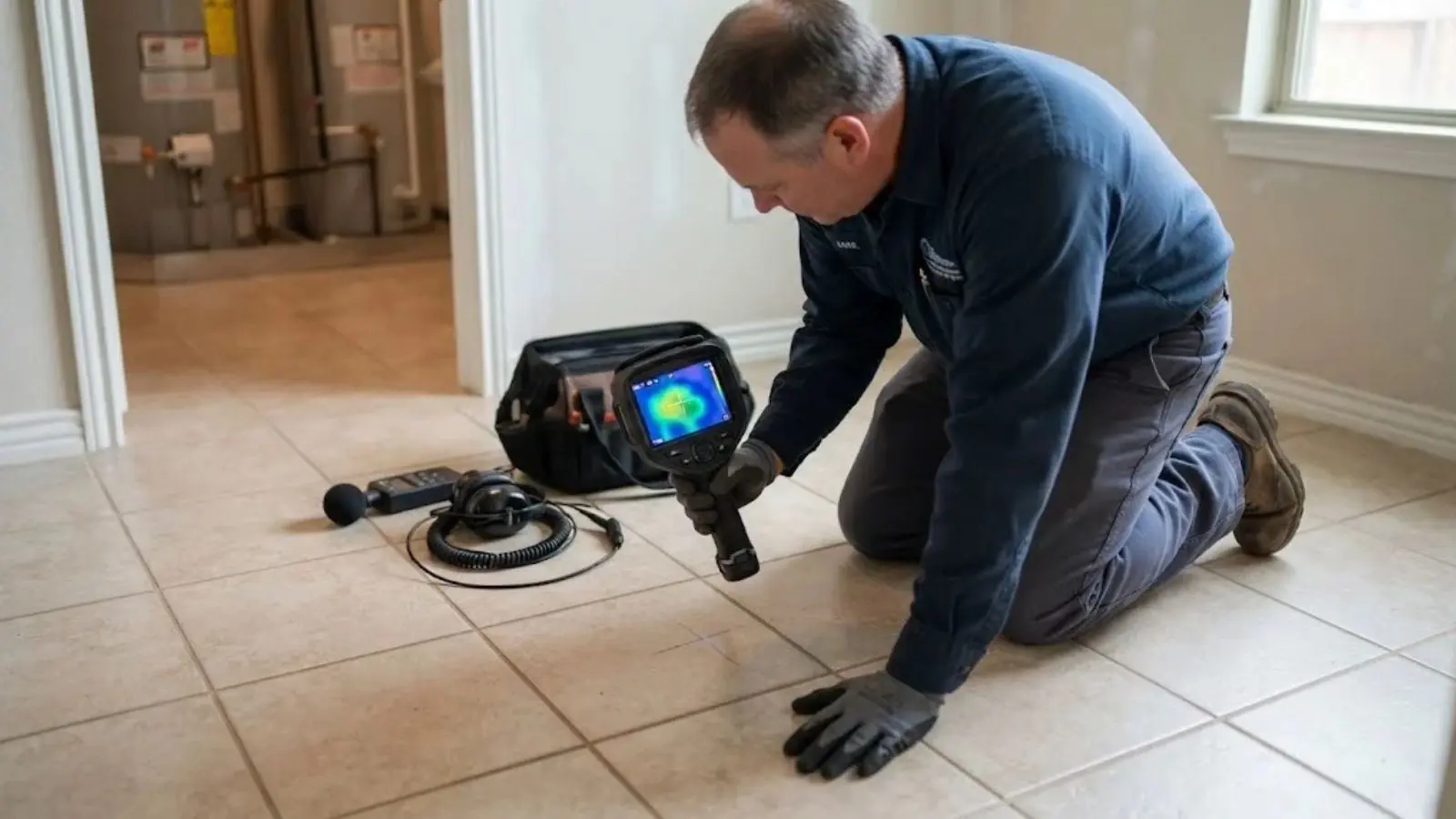
A brown ring on a ceiling or a bubbled patch of paint is the late stage of a leak that has been feeding for days. The stain often sits several feet from the real source because water runs along joists before it drips. A moisture meter and thermal camera tell us far more than pressing on drywall.
A supply line leak behaves differently from a drain leak. Supply leaks keep running at all hours and show a steady wet pattern. Drain leaks appear only after a shower, a flush, or a dishwasher cycle, which is why we ask when the stain grows. If the survey shows old supply lines failing in several places, a whole-house repipe may cost less than chasing one leak after another.
Leaks under floors and inside slabs
Warm spots on tile, a faint hiss when the house is quiet, and a meter that spins at night all point to a pressurized line below the floor. Hot water lines under concrete are the usual suspects because heat and movement wear the pipe. Our acoustic gear listens to the slab and marks the loudest point within a few inches.
Once the leak is located, the repair choices are spelled out on our slab leak repair page, from a spot fix to rerouting the line overhead. Shutting the main valve until we arrive keeps the loss from growing.
Once the leak is found, the repair follows the plumbing code, Florida's adopted version of the International Plumbing Code (IPC). Detection is the part that carries no code number: it is a diagnosis, and it should be documented.
Buried lines, irrigation, and pools
A soggy patch of lawn on a dry week, a sprinkler zone that sounds weaker than it used to, or green grass in a stripe over a pipe path can all signal a buried leak. Sandy Florida soil drains quickly, so a leaking yard line may show no puddle at all. We pressure-test the line and, where needed, use a tracer gas that rises through the soil to reveal the spot.
Irrigation leaks surge in the wet season, which typically begins in late May, because a broken head hides in the runoff. Check the current watering days with your county or water district before you test zones.
Pool and spa water loss
A pool that drops more than about a quarter inch a day beyond normal evaporation may have a plumbing leak in the return or skimmer line. We pressure-test those lines separately from the shell.
Leaks inside the meter box
Wet soil around the meter box may come from your side or the city side. Call Water Distribution first if water seems to come from the meter itself.
Methods we use to pinpoint a leak
Different leaks call for different tools, and a good survey combines two or three. This table shows what each method finds, and the same kit goes out to homes in Winter Springs and the rest of our service area.
| Method | Best for | What it shows |
|---|---|---|
| Acoustic listening | Pressurized lines under slabs and in walls | The loudest point of escaping water, marked on the surface |
| Thermal imaging | Hot water lines and wet insulation | Temperature differences behind drywall and under floors |
| Pressure testing | Isolating one line or zone | Whether a section holds pressure, and which valve to close |
| Tracer gas | Buried and hard-to-hear lines | Gas rising through soil directly above the break |
| Sewer camera | Drain lines with suspected cracks | A live view of breaks, offsets, and water entering the pipe |
Signs a leak is hiding in your plumbing
Any two of these together justify a call.
- A water meter leak indicator that keeps turning with all fixtures off.
- A monthly bill that rises with no change in household use.
- Warm patches on a floor or a sound of running water in a quiet house.
- Musty smell, peeling paint, or baseboards that swell and lift.
- Low water pressure that appeared suddenly at every fixture.
- Water heater that runs more often or refills when no one is using hot water.
- Wet or unusually green soil along the line from meter to house.
What leak detection costs
Cost depends on how hard the leak is to reach, not on how big it is. A leak behind an open access panel is a short visit. A leak under a finished slab with several possible lines takes longer survey time.
| Service step | Typical ballpark |
|---|---|
| Leak survey and diagnosis | $150 to $450 |
| Pressure test of one line | $100 to $250 |
| Repair after detection | Quoted per job, varies widely |
- Number of lines to testA single suspect line is quicker than isolating a whole home zone by zone.
- Access to the areaOpen crawl spaces and panels cost less time than finished tile, cabinets, or landscaping.
- Method requiredListening and thermal checks are routine. Tracer gas or a camera pass adds equipment time.
- After-hours timingNight and weekend visits can carry a different rate than a same-day daytime appointment when available.
These are typical ballparks that change with the job. We state the price clearly before work starts, so you decide with the number in front of you.
Where leak detection stops
If the water comes from the city side of the meter, Water Distribution at (407) 571-8340 is the right first call. If you smell gas or see sparks near water, leave the home and call 911. We find and repair leaks on the private side of the plumbing, and for a large water-damage cleanup you will also want a restoration company.
For a leak found on the line between meter and house, our water line repair service covers excavation and replacement.
Active leak right now: what to do while you wait
Close the main valve
Turn the shutoff near the meter or where the line enters the house a quarter turn until it stops. Running a faucet afterward drains remaining pressure.
Switch off power near wet areas
If water is near outlets, a panel, or appliances, turn off those breakers only if the panel itself is dry.
Protect what you can
Move rugs and electronics, set out buckets, and lay towels along baseboards to slow the spread.
Photograph the damage
Take dated photos of wet areas and the meter dial. They help with an insurance claim and with locating the source.
Call (407) 964-8940 any hour. Same-day appointments are available when the schedule allows, and our line takes after-hours calls for leaks that will not wait.
Leak detection questions
Yes. The line at (407) 964-8940 is answered around the clock, including nights and weekends. If water is actively escaping, close the main valve, then call, and we will schedule the earliest visit available.
Turn off every fixture and appliance that uses water, then watch the small low-flow indicator on the meter dial. If it moves, water is flowing somewhere. Note the reading, wait an hour with nothing running, and check again. A changed number confirms a leak.
Only after the leak is located. Listening gear, thermal imaging, and pressure tests narrow the spot first, so any opening is small and placed where the problem is.
Yes. Toilet flappers, underground lines, and slab leaks can run for weeks with nothing showing indoors. A meter that moves with all fixtures off is the clearest sign.
We pressure-test irrigation lines and the plumbing that feeds a pool or spa. Leaks in the pool shell itself belong to a pool contractor.
The city maintains the pipes and the meter that deliver water to your property. For anything past the meter, ask Water Distribution at (407) 571-8340 where the dividing line sits at your address, then call us for the repair.