First confirm you actually have a leak
Detection costs money, so rule out the easy explanations first. Turn off every tap and appliance, then watch the meter's small leak indicator or low-flow dial for movement. If it spins with everything off, water is escaping somewhere past the meter.
Compare your last three bills. A jump of 30 percent or more with no change in habits is a classic sign. Other clues include a warm spot on a floor, a musty smell, bubbling paint, or the sound of a trickle at night.
A toilet flapper that leaks silently into the bowl is the most common false alarm. Drop a few drops of food coloring into the tank and wait 15 minutes.
The tools and what each one finds
No single tool finds every leak. A good visit combines two or three.
| Method | How it works | Best for |
|---|---|---|
| Ground microphone | Listens for the hiss of pressurized water through soil or a floor | Slab leaks, buried supply lines |
| Correlator | Two sensors on a pipe time the leak noise to compute its distance | Long buried or exposed metal runs |
| Tracer gas | A safe hydrogen and nitrogen mix is injected and sniffed from above | Small leaks in plastic pipe or noisy areas |
| Thermal imaging | Shows temperature differences from wet or hot-water leak paths | Walls, ceilings, hot lines under floors |
| Moisture meter | Reads dampness in drywall, wood, or concrete | Confirming a suspected area |
| Pressure test | Isolates a pipe section and watches the gauge | Proving which zone is leaking |
Acoustic listening and correlators in plain terms
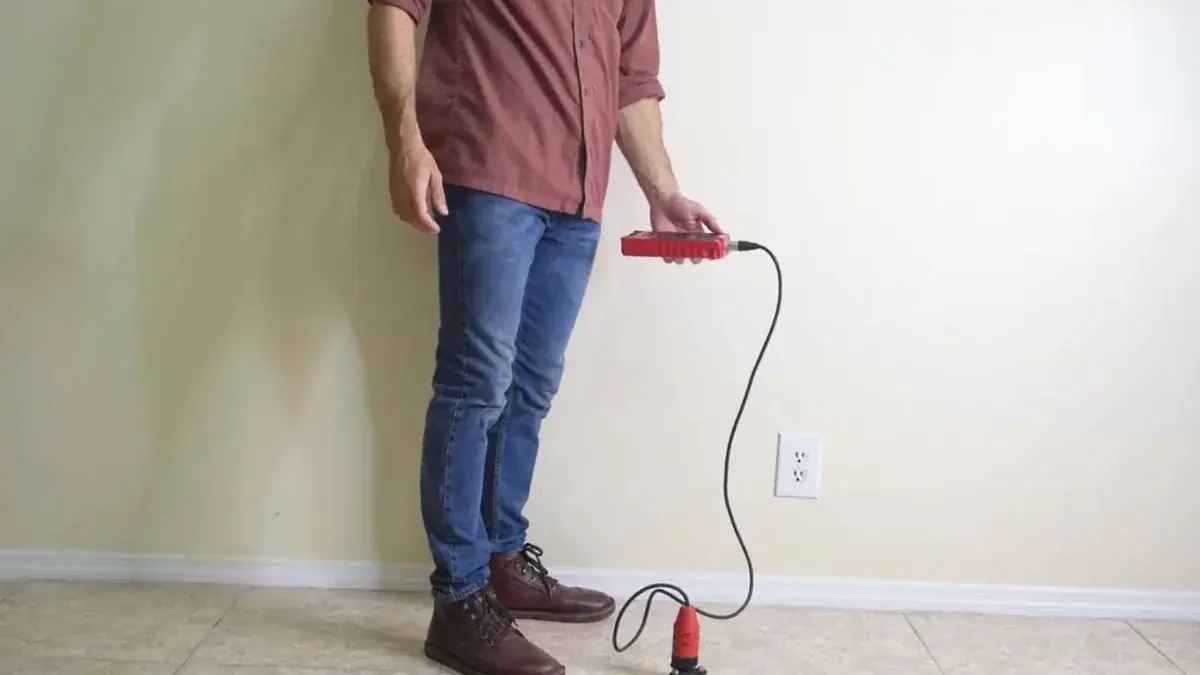
A pressurized pipe with a hole sounds like a faint hiss. A ground mic or floor sensor, like the handheld unit in the photo above, amplifies it. The technician walks a grid and listens for the loudest point.
A correlator makes it more exact. Two sensors clamp onto valves, hose bibs, or the meter at either end of a pipe. The software measures how long the leak sound takes to reach each one and calculates the distance to the leak.
Plastic pipe carries sound poorly, and city traffic, a running HVAC unit, or a pool pump can drown it out. That is why a quiet window helps, and why a technician may ask you to shut off the pool pump or the irrigation timer.
Tracer gas and thermal imaging when listening fails
Tracer gas is a mix of about 5 percent hydrogen in nitrogen. It is non-toxic and not flammable at that mix. The technician drains the suspect line, fills it with gas, and sweeps a sensitive detector across the floor. Gas escapes upward through the leak and shows up as a spike on the reading.
Thermal cameras show a surface as a color map. A hot-water leak under a slab makes a warm bloom. A cold leak in a wall can show as a cool patch from evaporation. A thermal image is a clue, not a final answer, so a good tech confirms with a moisture meter or sound.
Many leak calls end with a moisture map and a marked spot, which makes the repair smaller, faster, and cheaper.
What to do before the technician arrives
A few minutes of prep makes the visit cleaner and the results more accurate.
- Write down the meter reading, the time, and what was off when you read it.
- Close every faucet, and note whether toilets or the ice maker are running.
- Shut off the irrigation timer and the pool fill valve if you have them.
- Clear furniture from the suspect room so floors can be scanned.
- Note any warm floor, damp baseboard, stain, or sound and where it is.
- Gather photos of past leaks or repairs and any plumbing drawings you have.
What Altamonte Springs homeowners should know about leak hunting
The city's Water Distribution Division maintains the pipes, valves, meters, and hydrants that deliver water to your property, and its number is (407) 571-8340. If the leak looks to be on the meter side of the line, call them. If it is after the meter, it is generally your pipe to fix.
The city also has an online utility billing adjustment request form, but we did not find the policy terms, so ask the billing office what documents they want. Keep the leak report and repair invoice either way. UF/IFAS describes North and Central Florida soils as typically very sandy, which can spread leaked water away from the source and delay a surface sign.
Detection is diagnosis, so it has no code number, but any repair that follows is built to the Florida Building Code, Plumbing, an adaptation of the IPC.
Typical cost ballparks for electronic detection
Pricing depends on the size of the property, the pipe type, and how many methods are used. A typical visit for a single suspected leak commonly runs from about $150 to $600, while slab or buried-line work can run higher. These are typical ballparks that change with the job, not quotes.
We tell you the price before any work starts, and you decide whether to go ahead.
- AccessFinished floors, tile, and tight crawl spaces take longer to scan.
- Pipe materialCopper carries sound well, plastic does not, so extra methods may be needed.
- Number of suspected areasEach zone adds time.
- Report needsA written report for insurance or a utility takes extra documentation.
Detection does not repair the leak. If it turns out to be under a floor, the next call is slab leak repair, and a leak in the yard is handled as water line repair.
What electronic detection cannot do
It cannot see through every material, and it cannot find a leak that is not leaking at that moment. An intermittent drip from a valve or a leaking drain line may need a camera or a dye test instead. A drain leak is also a different problem from a pressure leak, because gravity lines do not hiss.
Shared walls and neighbors add noise in condos and apartments. Many of the city's 97 multifamily communities fit that situation, so speak with your property manager before scheduling work on a common line.
If you smell gas or see water near electrical panels, leave detection for later. Turn off power to the area if it is safe, and call 911 for gas.
After the leak is located
With the spot marked, the options are spot repair, rerouting the line through a wall or attic, or repiping the section. Small repairs are often a copper coupling or a few feet of new pipe. Repeated leaks in one run suggest the pipe is failing, which is when repiping is worth pricing.
A homeowner in Maitland or Lake Mary gets the same process. We send a technician to the door and state the price before work starts.
Leak detection questions
Not at first. Sensors, thermal imaging, and gas find the area from the outside, and only a small opening is made after the spot is marked.
Often yes. Ground microphones and tracer gas are the usual tools. Results depend on slab thickness and how loud the leak is.
It can place a leak within a short distance when the pipe is metal and the entry points are accessible. Plastic pipe and long runs reduce accuracy, so we confirm with a second method.
That depends on your policy and the cause of the leak. Call your insurer before you schedule work and ask what documentation they want.
The city's water utility handles the meter and the pipe feeding it, so start with its Water Distribution office. Have your address and meter reading ready when you phone.
The common mix is about 5 percent hydrogen in nitrogen, which is non-toxic and not flammable at that level. We keep ventilation on during testing.