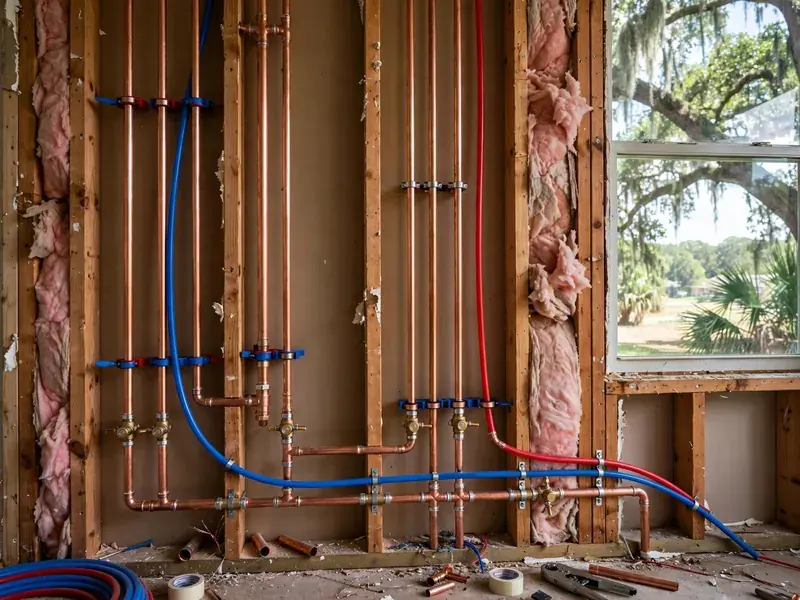
Where to look and what you are looking for
Polybutylene is easy to spot once you know the clues. Check these places and write down what you find.
- Water heater: look at the pipes going into the top. Gray plastic pipe, flexible and without a rigid glued joint, is a strong hint.
- Under bathroom and kitchen sinks: check the supply lines that run to the shutoff valves. Polybutylene in these spots is often gray, sometimes blue for cold water.
- Main shutoff area or utility closet: look where the line enters the house. Black or gray pipe at this point may be polybutylene service line.
- Markings: the pipe is often stamped with letters such as PB2110, along with the maker's name and a size.
- Fittings: look for metal crimp rings, or plastic fittings made of acetal. Copper or brass fittings with gray flexible pipe are typical.
- Attic or crawl space: if you can see the pipe route, flexible gray plastic running in long, gentle curves is a clue.
Why polybutylene fails
Polybutylene reacts with oxidants such as chlorine that are normal in municipal water. Over years, the pipe wall flakes and thins from the inside, and the pipe can look fine from the outside. Plastic fittings can also crack under the stress of crimp rings.
The result is a pipe that may leak at a joint or split along its length. Because the damage is internal, the first sign may be a sudden wet ceiling or floor. Not every home with polybutylene has a leak, but there is no way to tell which pipes will fail next.
A short national history
Polybutylene was sold across the United States as a cheap, easy-to-install alternative to copper, and builders used it widely through the 1970s and into the 1980s. As leak complaints piled up, a class action followed. A 1995 newspaper report describes a $950 million settlement fund that covered homes in 21 states, with Shell supplying the resin and Hoechst Celanese making the fittings.
That report is a secondary source and it does not say anything about Florida in particular. The practical point: if you buy or inherit an older house, assume polybutylene is possible and check for it before closing, not after the first leak.
Replacement pipe options compared
Three materials are common for a whole-house replacement. The right one depends on budget, access and your preferences.
| Material | How it is joined | Strengths | Trade-offs |
|---|---|---|---|
| PEX | Crimp, clamp or expansion fittings | Flexible, fewer fittings, fast to run through walls | Not for outdoor sun exposure, needs correct fittings |
| Copper | Soldered or press fittings | Long track record, rigid, handles heat well | Higher material cost, more labor |
| CPVC | Solvent-cemented joints | Cost-effective for hot and cold lines | Can become brittle with age, more fittings |
What a repipe looks like inside your house
The crew shuts off the water, cuts small access holes in drywall near fixtures, and pulls the new lines through walls or the attic. Old pipe is cut out or abandoned in place. Each fixture is reconnected and the system is pressure tested before the drywall is patched.
Most single-family repipes take two to five days, and water is off during working hours. Our repiping work includes patching access holes. Painting is usually separate. Plan to move furniture away from walls and clear under-sink cabinets.
Replacement piping must be a material the plumbing code allows, Florida's adopted version of the International Plumbing Code (IPC), so ask for the pipe type in writing before work starts.
What Altamonte Springs homeowners should know about polybutylene
The city's own pages do not say when most homes were built or which pipe materials were common here, so we cannot tell you your neighborhood's risk. Check your own pipes using the list above. The 2017 to 2021 American Community Survey count shows about 21,196 housing units in the city, with 10,382 renter-occupied and 8,829 owner-occupied.
That split matters. If you rent, a pipe inspection is the landlord's job, so ask the property manager in writing. If you own, phone the city's Building and Fire Safety office at (407) 571-8446 before you sign a repipe contract. The city lists a stand-alone plumbing permit for work without plans, but we did not find a published rule for repiping, so get the answer for your address.
What a repipe costs
These are typical ballparks for a single-family home and they change with the job. They are not quotes.
| Job | Typical ballpark |
|---|---|
| Repipe a small one-bath home with PEX | $3,500 to $7,000 |
| Repipe a typical two to three bath home with PEX | $5,000 to $12,000 |
| Repipe with copper | $8,000 to $20,000 and up |
| Partial repipe, such as one bathroom | $1,200 to $4,000 |
- Size of the homeBathrooms, kitchens and laundry connections each add pipe runs and fittings.
- MaterialPEX is usually the lowest cost. Copper costs the most for materials and time.
- AccessSlab homes route lines through walls and attic, and finished ceilings add drywall work.
- Permit and inspectionThe contractor normally pulls the permit, so ask who does and whether the fee is in the price.
- Drywall and paintPatching is usually separate from the plumbing price.
A plumber should state the price clearly before work starts. If the scope grows, expect a new price before that part goes ahead.
Insurance, selling and the cost of waiting
Some insurers ask about the pipe material, charge more for polybutylene or decline to cover a home that has it. Policies differ, so call your agent before you decide. If you plan to sell, many buyers and inspectors ask about it, and a repipe receipt answers the question.
Waiting carries a cost too. A single leak can mean wet drywall, mold and flooring repair that is far more than the repipe saved. If you cannot repipe now, a leak detection visit and a water-shutoff plan can reduce the risk.
If a polybutylene line lets go
A split polybutylene pipe can dump a lot of water in minutes. Act quickly.
Shut off the main
Turn the main valve at the house clockwise until it stops. If it will not turn, call the 24/7 line.
Cut the power if water is near outlets
Switch off the breaker for wet areas only if you can reach the panel without standing in water.
Open the lowest faucet
This drains the lines and reduces pressure on the leak.
Document the damage
Take photos and video before you clean, then call your insurance agent.
A technician can repair the split with a transition fitting as a stop-gap, then price a full repipe. If you are in Maitland or Longwood, our Maitland and Longwood service routes both run from Altamonte Springs.
Polybutylene pipe questions
It is no longer used for new residential supply in the United States. Codes and manufacturers moved to PEX, copper and CPVC. If you find it in your home, it is original to an older build.
No. Some homes have had it for decades without a leak. The risk is that failures are sudden and cannot be predicted, so most plumbers recommend replacing it.
Swapping fittings fixes only part of the problem. The pipe itself degrades from the inside, so a patch buys time but not a lasting repair.
Two to five days for a typical single-family home, with water off during working hours. Drywall patching and paint are scheduled separately.
Ask the City Building and Fire Safety Department at (407) 571-8446. The city lists permits for plumbing work, but the exact rule for repiping was not found on the pages we reviewed. A licensed contractor normally handles the permit.