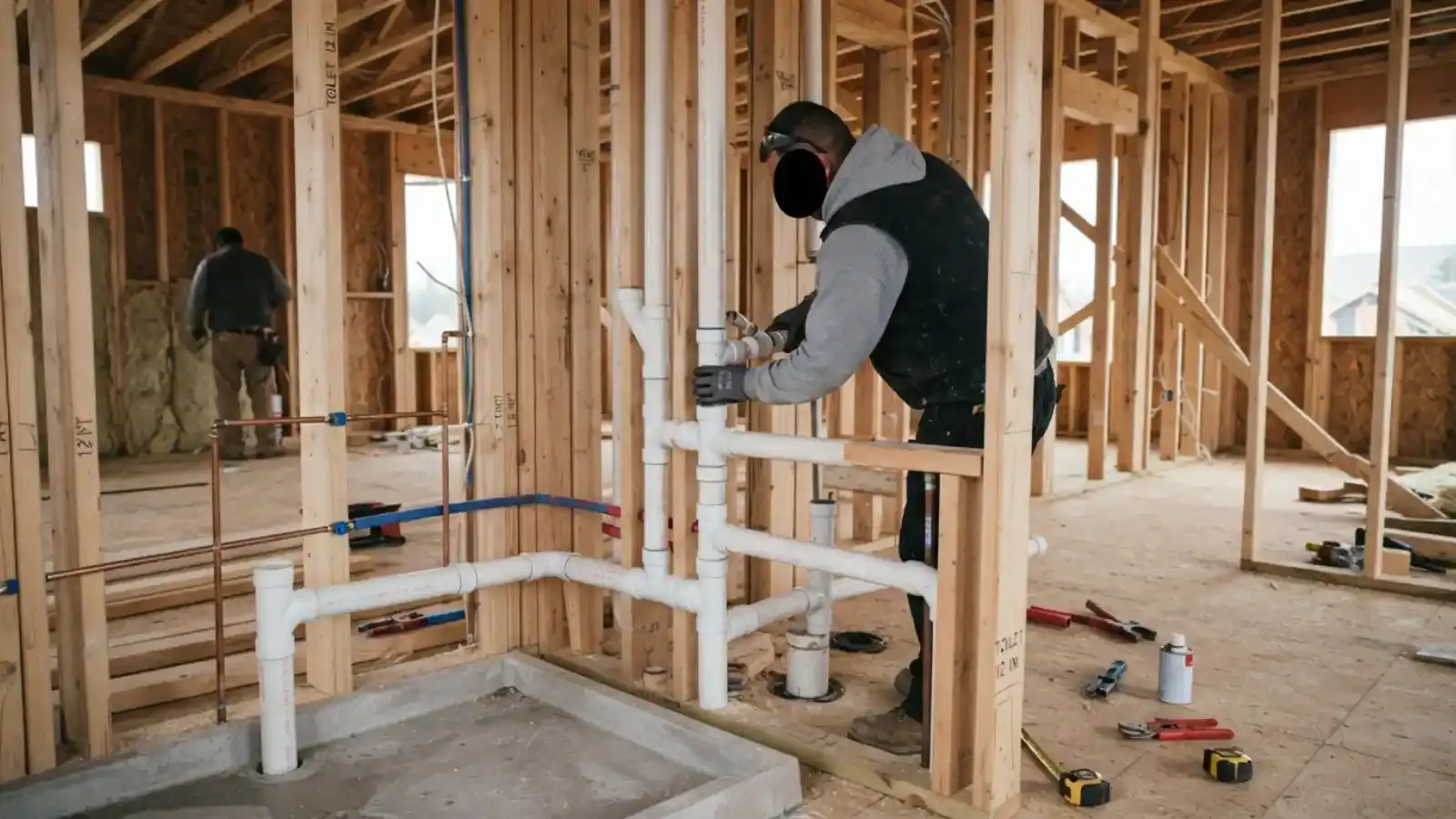
What the vent pipe actually does
Every drain needs air behind the water. Without it, water leaving a sink pulls a vacuum and can suck the water out of nearby traps. The vent pipe, usually 1.5 to 3 inches wide, lets outside air in and lets sewer gas out through the roof.
Most houses have one or more vent stacks that poke through the shingles. Fixtures in a room often share a branch that joins the stack inside the wall. When the roof opening or the pipe is blocked, the whole branch behaves badly.
Signs your vent is blocked
One slow drain is usually a local clog. A pattern across fixtures points to the vent or the main line.
- Gurgling from a sink, tub or toilet after another fixture drains.
- A toilet that bubbles or burps when the washing machine empties.
- Slow draining in several fixtures at once, with no clog found in the trap.
- Sewer smell near a drain, because the water seal in the trap has been siphoned away.
- A toilet that flushes weakly, with a sluggish swirl.
- A drain that works for a few minutes after a snake clears it, then slows again.
Vent clog or main line clog: telling them apart
Both problems make drains gurgle. The location of the symptoms is the best clue.
| What you see | Points to a vent clog | Points to a main line clog |
|---|---|---|
| Which fixtures act up | A single bathroom or a branch | Lowest fixtures first, such as a floor drain or ground-floor shower |
| Sound | Gurgle in the same fixture that is draining | Gurgle in a different fixture than the one in use |
| Water movement | Slow but it clears with time | Water rises and does not clear, may back up |
| Smell | Sewer odor from dry traps | Sewer odor with standing water |
| Quick test | Drain improves when you open a second faucet or the roof cap is cleared | Snaking the fixture does not help |
What blocks a vent on a Florida roof
The vent opening is exposed to the weather, and in this area the usual culprits are leaves, pine needles, bird nests, paper wasp nests and the odd dead lizard or rodent. Mortar chunks and roofing debris can fall in during re-roofing. A cracked or collapsed pipe inside the wall is less common and needs a plumber with a camera.
Inspect the vent from the ground with binoculars first. If you see a nest or leaves in the opening, that is likely the cause and it is a quick fix.
How to clear the vent yourself, step by step
Only attempt this if the roof is dry, the pitch is low enough to walk safely, and someone is on the ground to steady the ladder. Wear rubber-soled shoes and keep three points of contact on the ladder. If the pitch is steep or you feel uneasy, stop and call.
Use a flashlight to look down the pipe. Pull out any visible debris with a gloved hand or a wire. Run a garden hose into the pipe and watch whether the water drains away quickly. If it backs up and stands, there is a blockage lower down.
Using a snake on a stubborn vent
A 25-foot hand-crank drain snake with a small head can reach a typical vent branch. Feed it slowly, rotate when you feel resistance, and pull it out with debris on the end. Never force it through a stack that bends sharply, since you can puncture the pipe.
After clearing, flush the hose again and then run water in the fixtures inside. If the gurgling stops, the vent is clear.
Sewer smell and gurgling can also come from a failing wax ring or a dry trap in a spare bathroom. Run water in unused drains monthly to refill the trap before you blame the vent.
What Altamonte Springs homeowners should know about vents and drains
Orlando's National Weather Service wet-season data puts the median start of the rainy season at May 27, with a typical length of about 142 days. Storms also blow leaves and debris onto roofs, so a vent check in late spring, before the heavy rain starts, is a sensible habit.
The city handles sewer mains, manholes and lift stations. If drains back up in several fixtures at once, especially after a storm, call the city's after-hours sewer backup line at (407) 571-8686 to find out whether the city main is involved. If it is not, the problem is on your side, and our 24/7 line can send a technician.
Condo and apartment residents, which includes many of the city's 97 multifamily communities, should report vent problems to the property manager. Shared stacks run through the building, and a roof repair is not something a tenant can do.
Vent sizing and termination heights come from Florida's plumbing code (the IPC-based Florida Building Code, Plumbing), so a vent that has been altered is worth having checked.
When a plumber is the right call
Call if the vent clears and the gurgling returns within days, if the roof is steep, tile or wet, or if you suspect a break inside the wall. A technician checks the vent with a camera or a long cable, finds the blockage, and clears it from the roof or from a cleanout. They can also confirm whether the real problem is a clogged drain, which a drain cleaning visit would fix.
If the gurgling comes with water rising in a floor drain, the main sewer line may be blocked, and sewer line cleaning is the next step. Do not use chemical drain openers when you suspect a vent problem. They sit in the pipe and can damage it.
What clearing or fixing a vent costs
These are typical ballparks. They change with roof access, pipe depth and how many vents are involved. They are not quotes.
| Job | Typical ballpark |
|---|---|
| Clear a vent opening from the roof | $150 to $350 |
| Cable a blocked vent branch | $200 to $500 |
| Camera inspection of vent and drain | $200 to $450 |
| Replace a broken vent section in a wall | $500 to $2,000 |
- Roof accessA low single-story roof is faster than a tile or steep two-story roof, which needs more safety gear.
- Blockage depthA nest at the opening is quick. A blockage twenty feet down needs a longer cable and a camera.
- Wall repairIf a section of vent pipe has collapsed inside a wall, drywall must be opened and patched.
- Number of ventsSome homes have three or more roof penetrations, and each is checked.
You get a clear price before work starts. If something unexpected shows up in the wall, we stop and give you the new price first.
Vents on new work and remodels
A remodel that adds a bathroom or moves a sink needs a vent for the new fixtures, and a poor layout can cause the same gurgling you see in an old clogged vent. A typical rough-in has white PVC drains and vents running through the studs before drywall goes up.
If you are adding a bathroom, a licensed contractor handles the layout under plumbing installation work and arranges the permit. Ask the City Building and Fire Safety Department at (407) 571-8446 which permit applies to your project.
Keeping vents clear year after year
Trim branches that hang over the roof, and check each vent opening twice a year with binoculars. A small cap or screen is sold for some pipes, but a poorly fitted cap can trap leaves and block the vent, so ask a plumber before installing one.
If you live near Lake Mary or Casselberry, ask about a vent check at your next visit. Our crews serving Lake Mary and Casselberry can add it to any job, and tree trimming before leaf drop makes the check easier.
Plumbing vent questions
Yes. Without air behind the water, a toilet can flush weakly or slowly. If the toilet works well after a vent is cleared, the vent was the problem.
Sewer gas can enter the house when traps lose their water seal. The gas smells bad and can cause headaches in large amounts. Ventilate the room and call a plumber if the smell stays.
There is no fixed schedule. Check the openings once or twice a year and after major storms. Clear them when you see debris or notice gurgling.
Water from a garden hose is the safest choice. Chemical drain openers do not belong in a vent pipe, and they can harm you if you breathe the fumes up there.
Call the city's after-hours sewer backup line at (407) 571-8686. The city handles sewer mains and lift stations. If the main is clear, call our 24/7 line for the private side.