How an on-demand heater makes hot water
When you open a tap, a flow sensor detects at least about 0.5 gallons per minute and tells the unit to fire. A gas burner or a set of electric elements heats water as it passes through a stainless or copper heat exchanger. The control board watches the outlet temperature and adjusts the flame or power to hold your set point.
The key number is temperature rise, the gap between the incoming water temperature and your set temperature. A bigger rise means a lower flow rate the unit can sustain. That is why a unit that works well in summer can feel weaker on a cold morning.
Flushing and descaling your tankless heater
Minerals in the water bake onto the heat exchanger over time, and a thin layer of scale can cut efficiency and trigger error codes. A flush clears that scale before it gets thick. Most manufacturers call for a flush about once a year, and sooner if the water is hard.
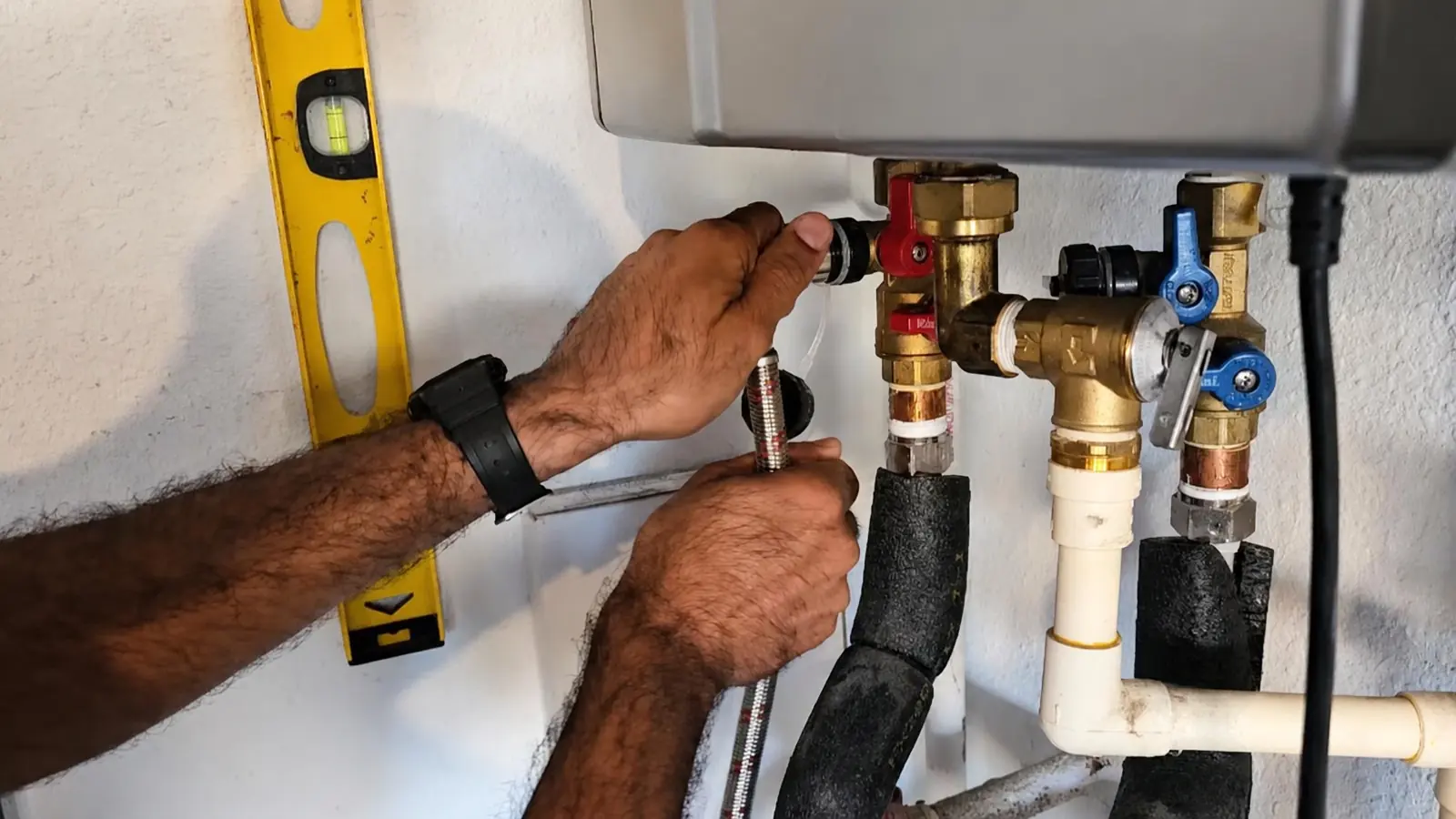
The process uses the two service valves under the unit. We close the water, connect hoses and a small submersible pump, and circulate 3 to 4 gallons of white vinegar or a descaler through the exchanger for 45 to 60 minutes. Then we rinse with clean water, clean the inlet filter screen, and restore the gas and water.
The city's water report we reviewed does not list hardness for Altamonte Springs, so a store-bought test strip at your tap is the quick way to judge your schedule. If your unit has no isolation valves, that is the first thing we add, because without them a flush cannot be done properly.
Gas or electric: comparing the two tankless types
Most homes can use either, but the supporting systems are very different. This table shows what to check first.
| Factor | Gas tankless | Electric tankless |
|---|---|---|
| Supply needed | 3/4 inch gas line, often with a larger meter | Heavy circuits, sometimes 120 amps or more across breakers |
| Venting | Stainless or PVC vent to outdoors | None, no combustion |
| Flow at a given rise | Higher, handles several fixtures | Lower, best for one or two points of use |
| Install complexity | Gas, vent and condensate drain | Panel capacity and wire runs |
| Maintenance focus | Burner, vent, scale | Elements, scale |
Sizing by flow rate and temperature rise
Add up the fixtures that run at once. A shower head often uses about 2 gallons per minute, a kitchen faucet about 1.5, and a washing machine around 2. If two showers and the dishwasher run together, you need 5 to 6 gallons per minute from the unit.
Then pick the temperature rise you need. If incoming water is 70 degrees and you set 120, the rise is 50. A unit rated at 7 gallons per minute at a 50-degree rise may drop to 4 gallons per minute at a 75-degree rise. We run these numbers with you, because a unit sized only by BTU label often disappoints.
Installing a tankless unit: gas, vent, circuit and drain
Gas, vent and condensate
Gas models often need a larger gas line than a tank heater, a new vent path through the wall or roof, and a condensate drain for high-efficiency units. The vent type is set by the manufacturer, so we follow the installation manual line by line.
Water side
We install isolation valves, a pressure relief valve where required, and often a recirculation loop or small buffer tank for fixtures that are far away. For a first-time planned swap from a tank, our water heater installation page covers the permit pointer and what we confirm first.
When a tankless heater stops working: repair calls
Common faults include scale, a dirty inlet filter, a failed flow sensor, a blocked condensate trap and an igniter that will not light. The display usually shows an error code. Write it down before you reset anything.
Another complaint is the cold water sandwich, a burst of cold between two hot flows. It comes from the unit shutting off and restarting, and can often be improved by adjusting flow or adding a buffer. If the problem looks like a failing tank unit, see water heater repair for the diagnosis path.
Venting, gas sizing and water connections on a tankless unit follow the manufacturer's instructions and the state plumbing code, which is modeled on the International Plumbing Code (IPC). We read both before the unit is hung.
Tankless maintenance schedule
Follow your manual first. As a general pattern, these tasks keep most units healthy.
- Flush the heat exchanger once a year, or sooner in hard water.
- Clean the cold inlet filter screen at each flush.
- Check the vent joints and the exhaust termination for blockage.
- Clear the condensate drain and neutralizer on condensing models.
- Test the temperature setting and note any new error codes.
- Look at the gas line and valves for leaks, with soapy water on joints.
What affects tankless water heater pricing
Tankless units cost more upfront than tanks, and the job around them varies a lot.
| Service | Typical ballpark |
|---|---|
| Flush and descale visit | $150 to $300 |
| Gas tankless install, like for like | $2,800 to $5,000 |
| Electric tankless install, with a new circuit | $1,800 to $3,800 |
| Isolation valve kit add-on | $150 to $350 |
- Unit type and capacityCondensing gas models and larger electric units cost more.
- Gas line or circuit upgradesA larger gas line or new electrical circuits can add a lot.
- Vent pathLong vent runs and roof penetrations add materials and labor.
- Condensate and valvesDrains, neutralizers and isolation valve sets add small but real costs.
- Service-only workA flush or filter cleaning costs far less than a new unit.
Those are typical ballparks and they change with the job. You get a clear price before we start.
Tankless units in Altamonte Springs condos and flood-prone areas
The city counts 17,110 multifamily units in 97 communities, and many condos and apartments have tight closets where a wall-mounted unit makes sense. Ask your association about vent routes and electrical limits before you buy.
A wall-mounted heater sits higher than a floor tank, which helps after local flooding, but it is not flood-proof. The Little Wekiva River overflowed in Hurricane Milton on October 14, 2024, so if water reached your unit, have it checked before use. We also serve Maitland homes when the schedule allows.
Limits, and the honest case against going tankless
A tankless heater is not always the right move. Homes with a small gas line, no vent path or a full electrical panel may need costly upgrades that make a new tank cheaper. If that is your case, we will say so and point you to water heater replacement with a tank.
We do not rebuild sealed factory boards or heat exchangers outside what the manufacturer allows. Gas smells are a 911 call first.
Tankless water heater questions
Most manufacturers call for a flush about once a year. Hard water or heavy use can shorten that, so check your manual and test your tap water.
Yes, if it is sized for it. Two showers at about 2 gallons per minute each need 4 gallons per minute at your temperature rise, plus extra if the dishwasher runs.
Often yes. Many units need more gas flow than a tank heater does, and the line, meter and vent are checked before we price the job.
Common causes are scale, a dirty filter screen, a blocked vent or a failed sensor. Write down the code and call, because the fix depends on the code and the model.
Manufacturers often quote 15 to 20 years with regular maintenance. Skipped flushes shorten that.
Call (407) 964-8940. The 24/7 line takes urgent failures, and same-day appointments are offered when available.