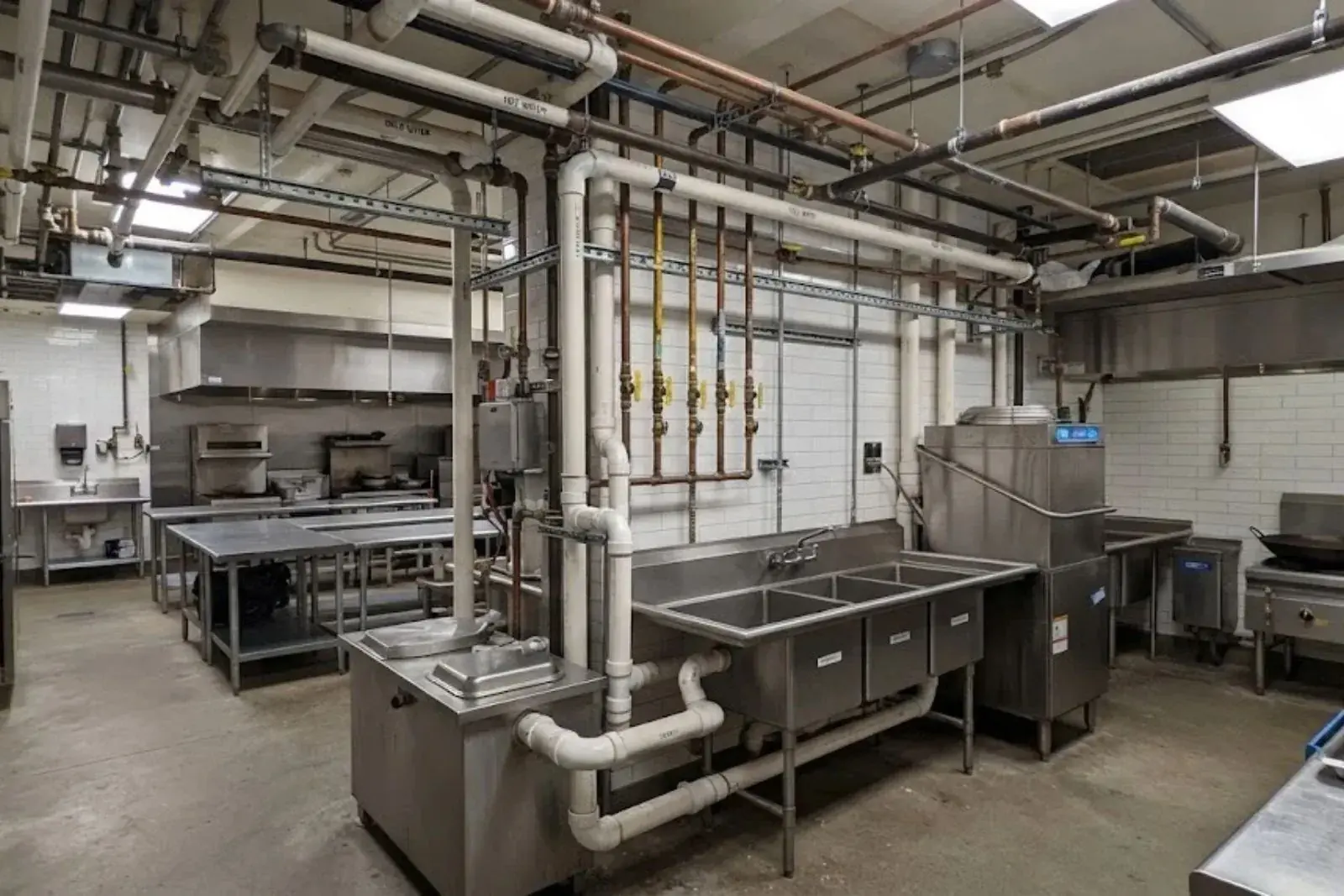
Your business is flooding or backing up right now
People first, property second. These steps apply whether you own the building or lease a suite in it.
Clear the area
Move customers and staff away from standing water, especially near floor drains, kitchen equipment and outlets. Wet tile is a slip hazard, and water near electrical gear is a reason to call 911.
Stop using the drains
Do not flush, run the dish machine or dump mop water down a floor sink. Every added gallon pushes more wastewater toward the opening that is already overflowing.
Close the water
Shut the building's main valve, or the fixture's own stop valve if that is the source. In a multi-tenant building, find out whether your suite has its own shutoff or the landlord controls it.
Capture the evidence
Photograph the water line, the fixture and any wet stock or equipment before cleanup. Note the time the problem began. Insurers and landlords will ask for both.
Call (407) 964-8940 with the address, the building type and what is overflowing. If the water is clearly coming from a city main in the street, the city's after-hours sewer backup line is (407) 571-8686.
Finding leaks inside commercial walls and ceilings
Commercial buildings hide pipe in ceiling plenums, chases and slab trenches, so a leak may show up two rooms from its source. Stained ceiling tiles, a musty smell and a water meter that spins with every fixture closed all point to a supply or drain leak.
Acoustic listening, thermal imaging and pressure testing narrow a leak to a short section before anyone opens a ceiling. That is the job of leak detection, and the same methods work in retail and office spaces.
Drains, floor sinks and kitchen lines
A floor sink or hub drain handles condensate, mop water and equipment drains, and each one carries more fat and food than a house drain. Slow drains, gurgling and sewer smell in a kitchen usually mean a line coated with grease or a trap that has overfilled.
A cable clears a blockage. High-pressure water scours the pipe wall, which is why hydro-jetting is the usual follow-up for lines that keep coming back. A camera shows whether a broken joint or root is the real cause.
Grease trap and interceptor cleaning for restaurants
A grease trap catches fat, oil and food solids before they reach the sewer. Small units sit under a prep sink, and larger interceptors sit below grade near the kitchen. When the trap is full, grease passes straight through and builds up in the drain line.
Cleaning means pumping out the contents, scraping the walls and baffles, and checking the inlet and outlet tees. Your cleaning schedule is set by your local rules, your hauler agreement and how heavy your cooking load is. Ask the city or your landlord which rule applies to your building before you pick a schedule.
Backflow testing and your water utility
A backflow preventer stops used or contaminated water from flowing backward into the public supply. Florida Administrative Code 62-555.360 requires community water systems to run a cross-connection control program. It also says non-residential backflow preventers are tested after installation or repair and at least annually, while residential devices are tested at least every two years.
The utility for a business here is the City of Altamonte Springs itself. Its Water Distribution office, (407) 571-8340, is the contact for device records. Ask what paperwork they want for your device, then call us to look at its location and condition, since a corroded or leaking assembly will fail a test.
Commercial work is held to the same plumbing code as homes, the International Plumbing Code (IPC) as adopted in Florida, and grease interceptor and backflow rules are checked by the local authority on top of it.
Common after-hours failures by type of business
Each building type fails in its own way. The table shows what a technician expects to find first.
| Building | Typical failure | First thing checked |
|---|---|---|
| Restaurant or cafe | Kitchen line backup, full grease trap, dish machine leak | Trap level, floor sink and the lowest drain that overflows |
| Retail shop or center | Restroom overflow, supply line burst behind a wall | Fixture stop, main valve and the shared drain |
| Office or medical suite | Slow sink, ceiling stain, water cooler or ice machine leak | Supply line fittings and the ceiling above the stain |
| Apartment building | Stack backup that floods the lowest unit | Cleanout at the building base and shared stack |
What to have ready when you call about a business
- The street address, suite number and a name and cell number for the person on site.
- What is overflowing or leaking, and whether it is clean water or wastewater.
- Whether a valve has been closed and whether the water has stopped.
- Whether the building is owned or leased, and who approves repairs.
- Any grease trap or backflow device in the space and where it sits.
- Photos of the problem and of the equipment label if an appliance is involved.
Multifamily, retail and medical buildings in Altamonte Springs
The city counts 97 multifamily communities with 17,110 units and about 50 multi-tenant retail centers, including Altamonte Mall and Altamonte Crossing. AdventHealth Altamonte Springs operates at 601 East Altamonte Drive. Shared stacks and shared drains mean one blockage can flood several units or suites at once.
If a stack backs up in a multi-tenant building, call the city's after-hours sewer line at (407) 571-8686 to learn whether the street main is involved. Then book sewer line cleaning for the private side. Responsibility for the line between the building and the main was not stated in the city pages we read, so ask Sewer Collection at (407) 571-8533.
What commercial plumbing work costs
Commercial jobs vary more than residential ones. These items shape the price.
| Job | Typical ballpark | What changes it |
|---|---|---|
| Drain clearing, one line | $250 to $800 | Line length and blockage type |
| Grease trap cleaning | $250 to $700 | Trap size and condition |
| Backflow test, per device | $75 to $200 | Device size and access |
| Leak location and repair | $400 to $2,000 and up | Depth, access and pipe material |
- Building accessRoof, ceiling and slab access can take as long as the repair itself.
- Equipment sizeA 50 gallon grease trap and a 1,000 gallon interceptor are different jobs.
- Hours and shutdownWork done while the business is closed may need extra planning, and we will explain any difference before you agree.
- Permits and testingBackflow devices, water heaters and larger repairs may require testing or a permit.
Those figures are typical ballparks that change with the building and the problem. The price is stated clearly before work starts, and anything that changes the scope is discussed with you first.
What we dispatch for and what we do not
We dispatch for urgent plumbing problems: floods, backups, burst or leaking lines, failed fixtures and drains that stop a business from operating. We also serve Maitland and nearby towns. Call (407) 964-8940 and a dispatcher will tell you what can be done today.
Some work belongs to others. Fire sprinkler and medical gas systems are separate trades. Roof leaks are a roofer's job. A gas smell means leave the building, call 911, then call the gas utility from outside. Plans for a new tenant build-out are best handled before construction, not at 2 a.m.
Commercial plumbing questions
Yes. Our dispatch line works after hours, on weekends and on holidays, and a business that is flooding or backing up is treated as urgent. Call (407) 964-8940 with the address and what is overflowing, and we tell you what can be done today.
It depends on trap size, cooking volume and your local rules. A busy fryer kitchen fills a trap faster than a cafe that mostly serves cold items. Check the schedule in your hauler agreement or ask the city, and clean sooner if the trap smells or drains slow.
State rules call for non-residential devices to be tested after installation or repair and at least annually. The water utility sets what paperwork it wants, so ask Altamonte Springs Water Distribution at (407) 571-8340.
That depends on your lease and on which pipe failed. Take photos, note the time, and tell the property manager at once. A technician can say whether the blockage was in your branch or in the shared stack.
Yes, for urgent problems such as stack backups, burst lines and failed water heaters. Have the property manager or board contact available, since shutoffs and access often need their approval.
Our focus is urgent service and repair. For a large build-out with drawings and inspections, ask us what part we can handle, since the design stage usually starts before a plumber is called.